War of Kings is a blog dedicated to my favourite comic books, books, games and movies.
Showing posts with label War Correspondence. Show all posts

Thursday, April 23, 2009

War Correspondence: Retracing the Steps

Today's post is about me, and what I have been up to recently. Because, if I am starved of my comics, I must turn elsewhere for entertainment, right? And I couldn’t go to Yu-Gi-Oh, as I have stopped playing it since the contract for Europe and the USA (and cause we get our stuff from one of those two places, South Africa) was ripped away from Upper Deck Entertainment. That is not the only reason I stopped playing, but it is a big part of it. Sure, if one of my friends pops over with a deck, I'll play against them, but I'm not buying any more cards. But despite all my good intentions, the universe wasn't going to let me escape from card games. Oh no.

About halfway through last year I bought (on impulse) the Duel Decks:Elves vs Goblins set from Magic: the Gathering. Unfortunately, I discovered that it was not beginner-friendly. And I couldn't pop around to the nearest Friday Night Magic event, because we don't have that in South Africa. And besides, I help out with Junior Youth at the church on Fridays (that is relavent, as you will see later). So the elves and goblins sat in my cupboard for a couple of months.

On my last visit to the Stable's Market, former home of Kick Ass Komix, I found an old tattered copy of a book calle Saviours of Kamigawa. It had fox-people in it. At one stage, the main character in the book I am writing, was a were-fox. So I bought the book for R10, mainly for research purposes, as I knew little about Japanese mythical fox-people, or how they are portrayed in modern fantasy novels. I then discovered that it was a novel set in the world (or rather, multiverse) of Magic: the Gathering. Imagine my surprise. They wrote books set in the worlds the cards came from? The books were good?

I had looked at the cards that I had bought, of course, and couldn't help noticing that many of the elves had horns (pretty deer or antler horns, that is, rather than the other kind). I eventually discovered that many of the elf cards came from a world called Lorwyn, based on Welsh Mythology. I also discovered that there were books about Lorwyn. So I ordered them from the nearest bookshop. After all, if I was stealing so extensively from Welsh mythology for my book, surely I would find these books useful. After all, I'm already stealing ideas from many other books I've read. (Though, hopefully, I'm doing it in a way that won't have people suing me.)

And then one of the other guys who helps at Junior Youth rocked up wearing a Lorwyn T-Shirt. I discovered he was a judge, and suddenly I've found myself meeting at Westville Library every Saturday to play Magic with a group of other guys (including guys I knew from the comic shop). And I'm actually enjoying it, so much so that I'm waiting eagerly for the novel Alara Unbroken (by Doug Beyer) to be published.

Apparently, some people play Magic to win. Others play it for many different reasons. Me, I like the stories. I've always been addicted to stories with a sci-fi or fantasy bent. I now read and enjoy Doug Beyer's weekly column about the stories of Magic (and how fantasy stories are written in general) . I even wrote him an e-mail in which I disagreed with him on how one of the lesser game mechanics (called retrace) should be seen. I knew it was presumptuous of me, having only played the game for a short time, and expected either no reply, or one explaining how I was wrong. So, imagine may surprise again, when he published the entire (rather lengthy) email in its entirety at the end of his column this week, and said he enjoyed it. So I'm gonna do a shameless self-plug and provide the link to it here.

So where to from here? I'll try to do a Quartermaster with the rest of Marvel's solicits soon. If I have time, I'd like to post some reviews of a number of novels I've read recently (I haven't only been playing and reading Magic). And I shall reveal a bit of stuff about my book. In fact, I shall go write something about why elven knights ride cats. I do not know if anyone cares, but I shall do it anyway.

Friday, February 6, 2009

War Correspondence: Solomon Kane and the Priests of Bast

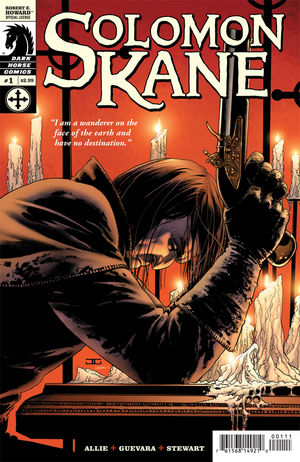
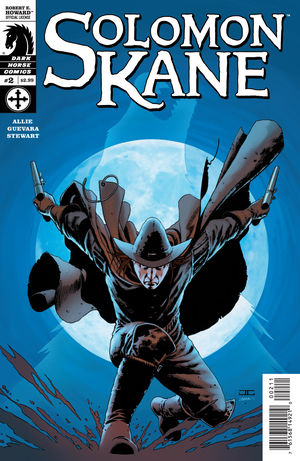
Today I went to the Central Lending Library in Durban to look at a book that is a collection of Robert E. Howard stories about Solomon Kane. You will recognise Howard as the creator of Conan, which led to stuff like Red Sonja and chainmail bikinis. I wanted to see what Howard had to say about the Staff of Solomon, as the Wikipedia article is…strange, and the rest of the internet appears to be silent on the matter. Yes, I did not think that was possible either, but it is.


When Solomon Kane was in Africa, he was given a cat-headed staff by the juju man N'Longa. A juju man is a highly racist version of a witchdoctor, but I won't blame Howard for that. Even H. Rider Haggard was guilty of that sort of thing. It’s a product of the times they lived in. Kane, being a Puritan, suspects that the staff is an Object of Dark Magic, but for some reason, he finds himself unwilling to get rid of it. This is fortunate, as it helps him fight of evil sorcerers and monsters. This reinforces Kane's suspicion that its is an Object of Dark Magic. But then he is captured by Arab slave traders, and is told by an elderly Arab named Yussef that it is the Staff of Solmon. King Solomon of Israel.


The staff has an incredible history - being first wielded by people who's kingdoms now lie under the sea, then by the Priests of Bast in Egypt, then by Moses, and the by King David and Solomon. In all cases it was used to fight of evil creatures and perform miraculous wonders. Then they run across some ancient ruins with a sealed door. Yussef warns his leader not to open the door, as this is likely a prison built by King Solomon to house an evil creature. (Because, of course, all ancient ruins in Africa were built by the Egyptians, Atlanteans or King Solomon.) But the Arab leader thinks that there is a great treasue behind the door. He orders his men to open it, and they do. Out rushes a demonic creature, who attacks and kills the Arab leader, and the rest of them flee, leaving behind Kane and the staff. Kane breaks his bonds, grabs the staff, and uses it to kill the creature. Looking at the staff, he realises that it is not a Object of Dark Magic, but an Object of Light.


I thought Howard invented the staff, but apparently does actually exist in legends. Unless the writer of the Wikipedia article on the Staff of Solomon is making things up. That is possible, as the article lists only one source, which is a description of the adaze(s) of Wepwawet being used in the opening of the mouth ceremony, part of the burial of a Pharaoh. The article claims that the staff is one of these objects. Wepwawet is a wolf-headed god often confused with Anubis - both were said to lead the dead into the underworld. Try as I might, I cannot find a link between Wepwawet and Bast. But apparently the makers of Age of Mythology could, as if you choose to follow Bast, you gain a technology called Adaze of Wepwawet which allows you to cut down trees faster.


Bast is, unfortunately, a very misunderstood goddess. The same can be said about Horus, Osiris, Isis, Set… well, just about any of the Egyptian gods. This problem stems partly from the fact that Ancient Egypt spanned a period of about 3000 years, and over time their beliefs about various gods changed drastically. They also had a habit of combining two gods into one. A further complication is added by the Greeks, who had an annoying habit of taking the gods of other cultures and identifying them with their own gods, and then projecting aspects of their own gods back onto the other gods, and then telling us about those attributes, despite the fact that the other gods never had them to begin with. Confusing enough? Bast was originally a solar lion goddess. Over time, Bast became associated with cats. But she was not the goddess of cats. She was a goddess with a cat head, who sometimes appeared in the form of a cat. She was regarded as a goddess of protection - but she would probably agree the best way to protect yourself is to go out and disembowel all of your enemies. It seems the Greeks decided she was like Artemis, and so told everyone she was a moon goddess. (By the way, the Panther God of Wakandia is apparently an aspect of Bast.)


There is one other problem with Howard's account - if you read Exodus you will notice that there are in fact two staves that perform miracles. At the burning bush Moses' shepherd staff turns into a serpent and back into a staff again, but when Moses and his brother Aaron appear before Pharaoh to demand the release of the Israelites, it is Aaron's staff that becomes a serpent. Aaron's staff turns the Nile to blood, and calls down plagues of frogs and insects. And then Moses' staff calls down hail and locusts. This does not make much sense - until you remember that God is performing the miracles, not Moses, Aaron or their staves.


Later Aaron's staff is put in the Ark of the Covenant, but Moses' one is not. So there may have been a tradition that Moses' staff was kept, and passed onto the Kings years later. But I can find no real evidence of this. This is an important issue, as I want to use the staff in my novel. But if Howard made it up, I don't think I can.

So I have two questions I still need to solve - did Howard make the staff up? And what do the makers of Age of Mythology know that I don't?

Sunday, October 5, 2008

War Correspondence - The Legacy of Messiah CompleX

I've been wanting to do this for a while, but I've been putting it off until the direction of the X-books could bee seen a bit more clearly. With IGN running an interview with X-editors Nick Lowe and John Barber that I can steal fr…I mean refer to, I thought now would be a good time.

About this time last year, we knew that the four team X-books (X-Men, Uncanny X-Men, New X-Men and X-Factor) would be involved in an old-style crossover called Messiah CompleX that would shake-up the world of the X-Men and that it would result in every X-book having a clear mandate which was different to every other X-book. Have they succeeded? I'd answer yes, but it took them a little longer to get there than I thought it would.

Messiah CompleX worked well. The four writers worked well together to produce a seamless, fast-paced, weekly storyline with stunning twists that gave the X-Men new hope and direction after M-Day - which was especially needed after the way most books had just ignored it. It also counterbalanced the birth of the new hope with the death of the old hope that had been driving them since issue #1 of Uncanny - the hope that mutants can exist peacefully with humans. They can't.

So, Uncanny X-Men became about the new hope. X-Force started the story of the dark secret behind why the new hope will succeed where the old failed. X-Men became X-Men: Legacy and explained why the old hope failed. New X-Men became Young X-Men, and continued to be about the last generation of X-Men who have a new hope that they are not actually the last generation of X-Men after all. X-Factor continued to rebel against the leadership of the other X-Men, now by being depressed instead of hopeful. Cable took two mutants who were stuck on the periphery of the X-verse with nothing to do and pulled them right into the centre by pitting them against each other with the new hope as first prize.

Except, it didn't happen quite like that. When Messiah CompleX ended, there was still a few issues to go before Uncanny #500 which was going to be the launching point of the new directions. So the books treaded water under the Divided We Stand label, giving us such unfortunate stories as the X-men going on holiday in Uncanny, Arcade popping up in X-Factor, and Pierce pitting the new X-Men against the new mutants in Young X-Men, and Bishop repeatedly trying to kill the baby in Cable. Whilst some of these stories might have been ok on their own, they added up to a disillusioning vision that we weren't going to be getting what they had told us we would. Nothing of any importance was happening in the 'flagship' Uncanny. Young X-Men was nowhere as good as the beloved New X-Men. Cable was an excellent concept, but executed very badly. And X-Factor felt like the only thing that Messiah CompleX had achieved was to derail its storylines.

That just left X-Force and X-Men: Legacy, both of which were praised. It is possible that X-Force was only being praised cause everything else was so bad, but X-Men: Legacy definitely deserved its praise for its examination of the history of the X-Men. The only problem with Legacy was that new readers wouldn't understand it.

Fortunately, there was a second chance to get it right under the Manifest Destiny label, which was launched by Uncanny X-Men #500. Manifest Destiny is not finished yet, but this time, it looks like its working. All the pieces are finally falling into place and each of the books are now following a different concept - the concepts I mentioned in the third paragraph. So, where exactly are they, and where are they going?

Uncanny X-Men
This is the flagship. This is where we first saw the move to Los Angeles, where we will see the X-men taking hold of their new hope and destiny. If the X-Men need to get involved with other superheroes like the Avengers, you'll see it here. If the X-Men have a huge crisis, you'll see it here. We have often been told that Uncanny has no lineup, no set team, like it used to do. I don't think that's entirely correct. I'd say that before, it was like a cricket team. You have your list of eleven players. If one of them gets injured, bad luck, you're short a batsman or bowler and can't do much about it. But now, its more like a soccer team. You have a core team of players who always play the whole match, and a number of substitutes who are swapped in and out as the need arises. The core team is Cyclops, Emma, Beast, Angel, Nightcrawler, Colossus, Wolverine and Pixie. So far we've seen Cannonball subbed in to blindside Magneto, and Karma subbed in to fight the Hellfire club. I'm not sure where to put Storm as she's still supposed to be Queen of Wakandia which is a long way from LA, but that's what the Storm: Worlds Apart miniseries will tell us.

Astonishing X-Men
This is the X-Men team book. It has an actual set team, which overlaps a lot with Uncanny, but you won't be seeing substitutes or big direction stuff here. It’s about a set team of X-Men fighting villains, beating them, then fighting the next lot of villains. Its not trying to be anything else. I'd say its probably for people who haven't read or don't want to read much X-Men. That is, if it manages to come out on time, which it doesn't seem to be doing.

Young X-Men
This is about the young X-Men. Well, some of them. They happen to be ones I don't care about, but I'm sure some people like these characters and will buy this book. It had a rocky start - if they needed to wait for Uncanny #500, why didn't they just delay the launch of this book? Regardless, it is now in LA like the other X-Men. This books identity seems to be somewhat diluted by the new direction. Before, there were four books about adult X-teams, and one about a teenage X-team. It had identity cause it stood out from the crowd. But now, all the others are so different from each other that there is no crowd to stand out from. It just feels like this will be 'Astonishing X-Men lite'.

X-Force
This book is the part of Uncanny X-Men that you don't see in Uncanny X-Men. It’s a clandestine team-within-a-team. The X-men don't know the X-Force exists, and for good reason. The X-Men don't kill, but the X-Force does. Here you see the dark side of Cyclops, Angel and Wolverine, who together with X-23, Warpath, Wolfsbane, and Elixir, decide who must be killed to keep the X-men safe. It asks a lot of questions people don't want to answer. I'm prepared to pretend it doesn't exist and not buy it, rather than complain about it and ask them to stop publishing it. X-Force? I don't know about any X-Force. What does that say about me?

X-Factor
X-Factor hasn't changed a whole lot. It was a noir detective book about a group of X-Men, a close-knit business rather than a team of superheroes, who tend to disagree with Cyclops and the other X-men and do their own thing, and it still is. Sure, they've moved from New York to Detroit, but all that changes is that they are now even farther from the rest of the X-Men and even less likely to get involved with them. It was on a bit of a rocky road after Messiah CompleX, but it seems to have pulled itself together and started using the damage that was done to it as an asset rather than a liability.

X-Men: Legacy, Wolverine: Origins and Wolverine
This is not a team book, even though it has a number of X-men in it. This is a book about individual characters who are not currently with the X-Men in LA, but are off in various parts of the world assessing their relationship with the X-Men. It could have been called the X-ternals, but that would imply there was some sort of unity between the disparate characters. Its mostly been about Professor X, with some Gambit and Sebastian Shaw thrown in, but at the moment it’s the Prof, Wolverine and Daken. After that, Rogue will soon become a big player. X-Men: Legacy has just started a crossover with Wolverine: Origins, which many find amusing as they are reputed to be the best and worst X-books respectively. What the crossover has done is pull Origins out if its own corner and put it firmly into the X-verse. We are told it will be staying here, and stuff in it will impact other books more and more. What does that mean for Wolverine itself? At the moment its off in the future, crossing over with Fantastic Four, and having nothing to do with the X-verse. All Barber will say is that it will return to the present day next year. So Wolverine is a wildcard at the moment.

Cable
Cable is off in the future protecting a baby while Bishop tries to harm him by changing the present. I do not understand this book. I've read books like The Seeds of Time, by Wyndham, and watched series like Star Trek, so I thought I understood time travel. But I cannot fathom how Bishop thinks changing the future will harm Cable. He doesn't even know where Cable is. Does he have Layla Miller's powers now or something? There is hope though - according to Barber, Marvel will continue the good book / bad book crossover trend by having an X-Force/Cable crossover in the near future.

Events
I have spoken at length on X-Infernus, so all I will say here is that Lowe calls it a 'Deadly Genesis style mini'. Lowe say the X-men won't play a role in War of Kings - which I assume means that no X-Men except Havok, Polaris, Marvel Girl and Vulcan will be involved, but there is another big plan for them in summer 2009. Does this mean the X-men will finally get directly involved in an event? Then 2010 will see another Messiah CompleX style crossover - I'm glad they're doing another one, and equally glad that its only happening in 2010, giving the X-books time to settle into their new roles.

Friday, September 5, 2008

War Correspondence - The All Old, All Different X-Men

I glanced through IGN and Kirk's reviews of Manifest Destiny, and they made me sad. I hope the Iceman story gets a lot better. He really needs a good story. He seems to be the only one of the originals who hasn't evolved from who he was during the original run of X-Men. The other four male characters have - and are all in a really cool place right now.

Professor X first appeared as a strict no-nonsense schoolmaster, but we soon came to see that he cared very deeply for his students in particular, and mutants in general. But he had this mean streak in him - mind wiping people, including his own students, without as second thought; and on one occasion leaving them to mourn him for dead whilst he worked in a secret project in the basement. For someone trying to protect mutantkind, he made a lot of questionable decisions. It didn't quite add up. Until he lost his memory and started investigating why he founded the X-Men in the first place. We now know that he had been manipulated by Mr Sinister from a very young age. Sinister placed part of his own DNA into Xavier, which appears to account for Xavier's mean streak and his tendency to want to control others. The Professor's journey of self-discovery is not over, and it promises to be a fun ride.

Cyclops was chosen as the leader of the X-Men by the Professor, yet he was often undeceive and unsure of himself. He spent a lot of time hoping to be 'cured' - not a trait one especially wants in a leader of mutants. He had also been manipulated by Sinister when young, and, I hate to say this, but it is possible that his love for Jean was purely a product of Sinister's machinations. That would certainly explain him abandoning his son and wife when he heard Jean was alive. Professor X was right, though, as not a trace of Cyclops former self remains. He has broken free of Sinister, and even Xavier, and stepped up to be the new leader of the X-Men. He's with Emma, where he wants to be - in House of M he was married to her, not Jean. He is at peace with his dangerous power. He has the confidence to make tough decisions - abandoning the mansion, sending Cable and the baby into the future, organising a black ops team. Or so it seems. We've seen his nightmares, and him building a crib in the middle of the night. And while I may not agree with some of his decisions, at least he's making them (and sticking to them) for the right reasons.

Lets be honest, Angel was a spoiled brat with the worst power of the lot. But boy has has grown up. Yeah, he's still a bit of a playboy who likes fast cars, but it takes a lot of maturity, knowledge and intelligence to run something like Worthington Industries. And he's definitely not selfish, putting his entire company at the disposal of the X-Men. Plus he seems to be able to switch between his angel and archangel forms. He hasn't been this cool in years.


Its both easy and hard to demonstrate the Beast's change. He's changed the most physically, but because he was always so intelligent and confident, he doesn't seem to have changed much in that respect. But looking at the original stories, he was a showoff - very overconfident. He also used to use big words a lot more. These day's he is far more subtle - he's far less likely to leap before he looks, making him a better fighter, and his speech is more restrained, and yet he sounds just as intelligent. But now he's blue and furry. That's just awesome.

Friday, August 29, 2008

War Correspondence - Casualties of War

Kirk's Top Ten Comic Book deaths list, and Joe Quesada talking about ensuring that comic book deaths are meaningful, prompted me to think back on the deaths I've seen in comics. I came up with this list:

Deceased: Scott Lang
Perpetrator: Scarlet Witch
Circumstances: The 'death' of her 'children' having driven her insane, the Scarlet Witch lashes out at the Avengers. The first death she causes is that of Ant-Man Scott Lang - who is incinerated after the witch resurrects Jack of Hearts and then causes Jack to explode.

Deceased: William Stryker
Perpetrator: Elixir
Circumstances: Stryker's Purifiers kill many of Elixir's friends and then leads an assault on the Xavier Institute. In order to stop Stryker, Elixir reverses his healing powers, and kills Stryker by giving him multiple tumors and other nasty stuff.

Deceased: Unnamed Assassin
Perpetrator: Layla Millar
Circumstances: An assassin sent to kill Richter is accosted by Layla, who had broken the taps in an upstairs bathroom the morning before, causing the bathroom floor to collapse from water damage. This allows wiring to drop down and electrocute him.

Deceased: Professor Buchanan
Perpetrator: Guido
Circumstances: Guido is sent to escort the Professor to a safe house - but halfway there Guido kills him. It is later revealed that Guido has been brainwashed into becoming a double agent for Damien Tryp.

Deceased: Damian Tryp
Perpetrator: Jamie Madrox
Circumstances: During a battle in the headquarters' of Tryp's company, Madrox's powers create a duplicate of himself which embodies his 'dark side'. The duplicate sets off a bomb, destroying the headquarters and killing himself and both versions of Tryp.

Deceased: Elijah Cross
Perpetrator: Quicksilver
Circumstances: The depowered members of X-Cell were repowered by Quicksilver. Quicksilver neglected to tell Cross how unstable his new powers are, and Cross explodes whilst using his restored powers. Fearing the same will happen to the rest of X-Cell, Abyss uses his restored powers to send himself and the others to the darkforce dimension. Their fate is unknown.

You may note the trend here. In Young X-Men, Nicky stops Rockslide from killing Pierce, saying 'X-Men don't kill. And we're X-Men.' But the evidence is contrary - X-Men do kill. I know a lot of excuses can be made for the above deaths - but excuses could have been made for Jean Grey in the Dark Phoenix Saga. And it was decided that someone with that amount of blood on her hands couldn't be excused. If you think about it, surely Elixir could have just put Stryker in a coma? Surely Layla could have used her prediction powers to organise the assassin's arrest? Do I want to read about heroes who are unable to control that part of them that says 'kill'? Do I want to read books in which the Scarlet Witch and Quicksilver are redeemed? Now, sure, I can understand and even accept the existence of Wolverine and X-Force, the guys who do what the other X-Men can’t. But there's a reason I decided not to buy Wolverine or X-Force. Maybe I should change my mind and buy Young X-Men. Even if the writing is not as good as the other books, at least it has a message I can agree with: Heroes don't kill.

Friday, August 22, 2008

War Correspondence - Keeping Up With the Timeline

'…in an action story more than any other kind, the more up to date the setting, the more impossible it becomes to avoid being dated after a certain number of years. … Even if one could eschew every topical allusion...one would still be betrayed by what seemed at the time to be the simple basic assumptions of timelessness.'
- Leslie Charteris, Introduction to Saints Alive, 1973

Leslie Charteris' first Saint story was published in 1928. As you can see, almost 50 years later, he was still going strong. And by 1973, Charteris had inadvertently created a bit of a paradox, in that in every story took place at the time in which he was writing it - and though the years took their toll on him, the Saint never seemed to ever get any older. At the time of writing this introduction, Charteris says that he knows of no other fictional character to whom this has happened. And I haven't been able to prove him wrong. Nowadays it is a different story - just read early issues of Fantastic Four or the X-Men, or watch all the Bond movies and you'll see the same thing.

The reason that this was such a problem for the Saint was that most of his books were collections of short stories rather than full-length novels, and (especially in the later years when they made collections of the best stories) you had the Saint struggling to get messages to people on time due to the delays in the telegraph system, and picking up a radiophone in his car in the same book. As Charteris says, you can't get around this - eventually your action hero is going to want to use the fastest way to travel or communicate - and then you're stuck. Charteris looks back on the increases in car and plane speed, asking 'How fast is fast?' That depends on what the year is. There's inflation. The tip which renders someone speechless today will be scoffed at tomorrow. There's ethics. In the time of Sherlock Holmes, 'no pure girl would visit a bachelor's pad after tea, but a shot of cocaine was merely a quaint eccentricity.'

'The Saint,' says Charteris, '...is in the awkward position of trying to straddle the gap between being a period piece and a trend for tomorrow. As any such gymnastic, he must be in danger of splitting his pants.' He considers modernising the older stories, but decides that such a job would never be finished, having to be redone every few years just to keep up, and finally concludes that perhaps any future stories would have to fill in gaps between other stories rather than taking place in the present, where the saint's 'unquenchable vitality would become increasingly implausible and eventually ludicrous.'

Can you straddle the gap without splitting your pants? I gather that this was what the original Crisis attempted to do. Keep the characters young, but put them in the present so they're contemporary and relevant. The Ultimate Universe was more successful at it - except that leave long enough and it too is will suffer from the same time malady as everything else. And, ah, Spider-Man. I won't even try to talk about him.

So what's the solution? There are many, none of them entirely satisfactory. Probably the best was freezing Captain America in ice, and bringing him out again to join the Avengers. But you can't do that again. Nick Fury and Wolverine have slow aging - one due to science, and one to genes. Give every single superhero slowed aging? It would work, but how do you go about doing that? Have a new hero take over the old hero's mantle, the old hero dying or retiring. Works fine except for fan outcry or until someone comes up with the bright idea of bringing back the old hero, and you result in the mess DC had (has?) with their legacy heroes. A modified version of this could work on the X-Men, and has to a degree, have the old heroes eventually retire and a new generation (including their children) come to the fore to replace them. (It’s hypocritical of me to suggest this when I'm not buying Genext or Spider-Girl.) And the last solution I can think of is to set all the comic books in a specific time, instead of in the perpetual present. But I don't think anyone wants that.

So, all that is left is for me to follow Charteris' advice and remember how much time these sagas cover, make allowances for the changing backgrounds, and enjoy the fun just as it is.


All quotes from Saints Alive by Leslie Charteris, published in 1974 by Hodder and Stoughton Limited, London.